Digital marketing for small businesses has become an important part of growing in today’s online world.Running a small business is not only about offering a good product or service. Customers increasingly use digital channels to discover businesses, compare options, read reviews, search for information, and decide where to spend their money.
This makes having a strong online presence an important part of modern business growth.
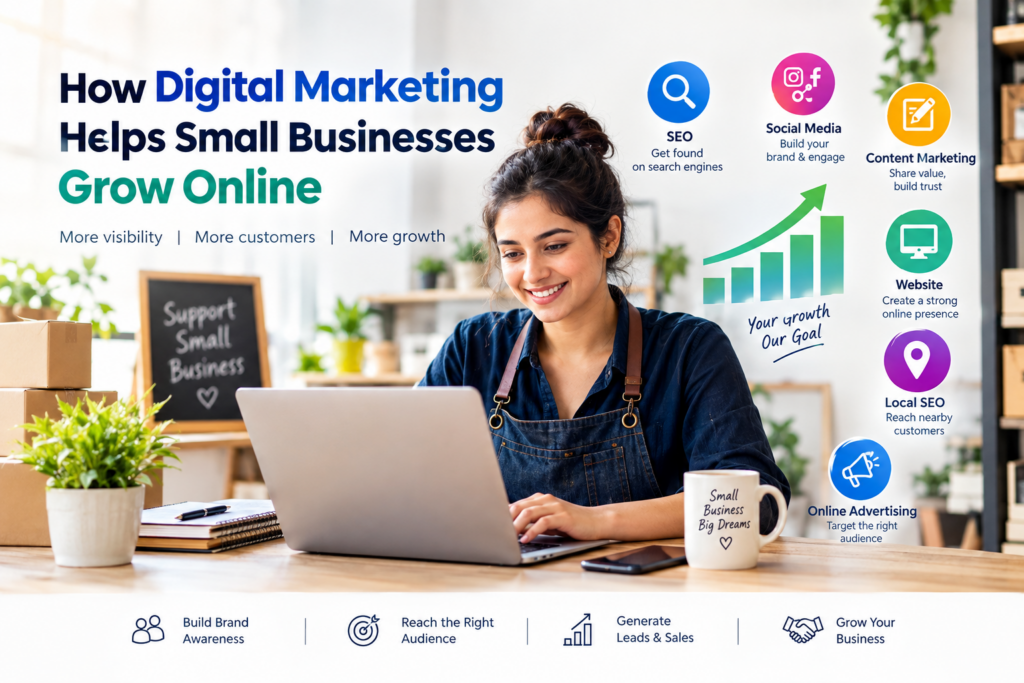
Digital marketing gives small businesses different ways to reach potential customers through search engines, websites, social media, content, online advertising, and other digital channels.
The good news is that small businesses do not need to use every platform or spend a huge amount of money to get started. A focused strategy based on the right audience, useful content, search visibility, and measurable goals can create a strong foundation for online growth.
In this blog, let’s explore how digital marketing can help small businesses build visibility, connect with customers, and grow online.
What Is Digital Marketing for Small Businesses?

Digital marketing is the process of promoting a business, product, or service through online channels.
For a small business, digital marketing can include:
- Search Engine Optimization (SEO)
- Social Media Marketing
- Content Marketing
- Website Optimization
- Local SEO
- Email Marketing
- Search Engine Marketing
- Online Advertising
The purpose is not simply to get more views or followers. A good digital marketing strategy should help a business reach relevant people, build trust, generate enquiries, and ultimately support business goals.
Why Is Digital Marketing Important for Small Businesses?
Customers are increasingly using digital channels to discover businesses and make purchasing decisions.
Digital marketing can help small businesses:
- Increase online visibility
- Reach potential customers
- Build brand awareness
- Generate leads and enquiries
- Build customer trust
- Understand marketing performance
A business does not need to be active on every platform. Choosing the right channels based on its audience and goals is more important.
How SEO Helps Small Businesses
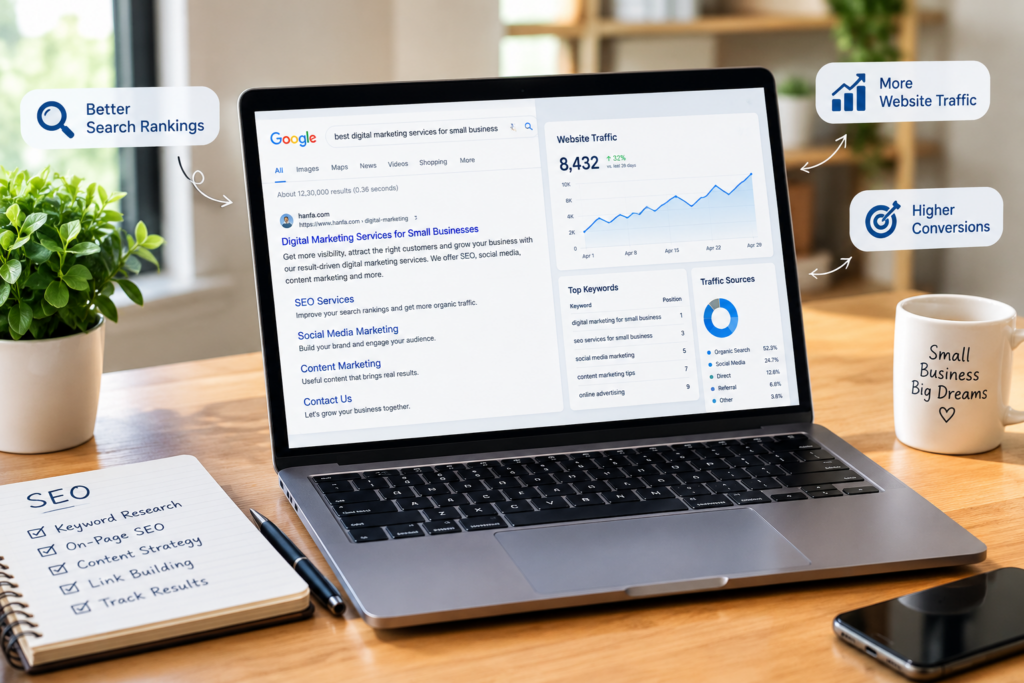
Search Engine Optimization (SEO) helps businesses improve their visibility in search engines.
For example, a local bakery could create useful content around searches such as birthday cakes, custom cakes, or bakeries in a particular location.
Important SEO activities include:
- Keyword research
- On-page SEO
- Technical SEO
- Content optimization
- Local SEO
- Internal linking
A well-optimized website can attract relevant visitors from search engines over time. However, SEO usually requires consistency and patience, as results depend on factors such as competition, search demand, and website quality.
Social Media and Content Marketing
Social media gives small businesses a way to communicate directly with their audience and show what they offer.
Businesses can share:
- Educational posts
- Product or service information
- Short videos
- Customer experiences
- Tips and guides
- Behind-the-scenes content
Content marketing can also help businesses build trust by answering customer questions and providing useful information.
Instead of only promoting a product, businesses can create content that educates, helps, and connects with their audience.
A Website Creates a Strong Online Foundation
A website gives customers one central place to understand a business and its services.
A small business website should clearly communicate:
- What the business offers
- Who it serves
- Its products or services
- Why customers should choose it
- How customers can get in touch
A good website should also be:
- Mobile-friendly
- Easy to navigate
- Fast-loading
- SEO-friendly
- Clear and professional
- Focused on a strong call to action
Your social media may introduce people to your business, but your website can give them the information they need to take the next step.
How Small Businesses Can Get Started
Digital marketing does not have to be complicated.
A small business can start with a simple approach:
1. Know your audience
Understand who your customers are and what they need.
2. Set a clear goal
Decide whether you want more enquiries, sales, bookings, website visitors, or brand awareness.
3. Build a strong website
Make sure visitors can easily understand your business and contact you.
4. Focus on SEO
Create useful content around the searches your potential customers make.
5. Choose the right social media platforms
Focus on the platforms where your target audience is active.
6. Measure and improve
Track your results and continue improving your strategy.
Conclusion
Digital marketing gives small businesses many opportunities to become more visible, reach potential customers, and build trust online.
SEO can help people discover a business through search, social media can create connections, content can build credibility, and a professional website can turn visitors into enquiries or customers.
The goal is not to be everywhere.
The goal is to reach the right people, provide value, build trust, and create an online presence that supports business growth.